Four hotels where the bed sits inside a closed cell of its own.
Capsule Hotels — 4
This section is small and it is strict. A hotel belongs here only when the sleeping place is a separate closed cell, with its own walls, its own light and its own door or curtain. A private room is not a capsule, and a bunk in a shared dormitory is not one either. Four hotels meet that test: two in Tokyo, one in Manhattan, one inside an airport terminal.
07
Tokyo, Japan
First Cabin
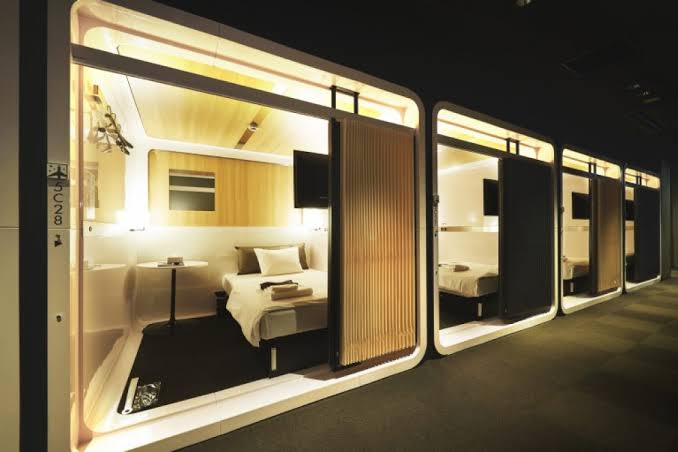
First Cabin, Tokyo — cabins built to the dimensions of an aircraft first-class seat area.
A · The Place
First Cabin runs several sites across Tokyo, and they sit close to stations rather than in quiet streets: Akasaka, Tsukiji and Haneda among them. Each one occupies floors inside an existing office or commercial building, so the entrance is usually a lift lobby rather than a facade of its own. Convenience stores and places to eat are within a minute of the door, and that walking distance is the reason the location was chosen.
ASeasonTokyo is fullest at New Year and during the cherry blossom weeks.
AGetting thereEvery branch stands minutes from a station; confirm which branch you booked.
B · The Building
The idea comes from aviation. Cabins are built to the dimensions of a first-class seat area rather than a bunk, with solid partitions on three sides and a curtain or a screen on the fourth. The ceiling is high enough to stand under. Floors are laid out as straight corridors between rows of cabins, with a lounge at one end and communal bathing rooms at the other. Men and women use separate zones.
BThe FabricSteel partitions, laminate panels, fabric doors and carpet along the corridors.
C · The Night
A cabin holds a full bed, a shelf, a mirror and space for a small case; larger luggage is kept at the desk or in lockers. Because the door is fabric, sound travels, and guests are asked to speak quietly and to take telephone calls outside. Bathing is communal in the Japanese manner, with a large bath and washing stations, and towels and a robe are handed over at check-in.
CAsk at check-inAsk about locker size, the women's floor and when the bath closes.
Last read: June 2026
08
Tokyo, Japan
Book and Bed Tokyo
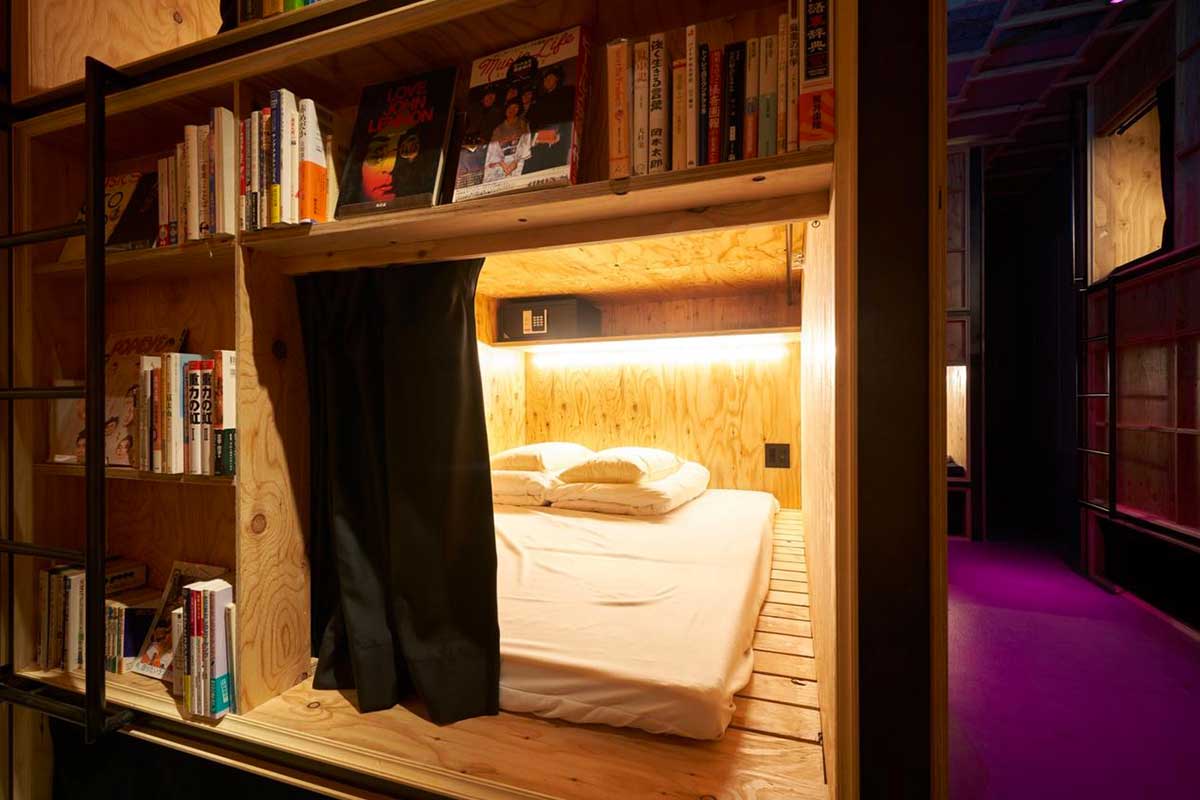
Book and Bed Tokyo — berths cut into the bookshelves, reached by a short ladder.
A · The Place
Book and Bed has sites in Tokyo, among them Ikebukuro and Shinjuku, on upper floors of commercial buildings beside the stations. The windows look down on the street and the trains run below them. Around the entrance the district stays busy until late, with restaurants, bookshops and arcades. The address is not a quiet one; the reason to come here is the room itself rather than the neighbourhood outside the lift.
ASeasonTokyo book floors stay busy at weekends and through the New Year.
AGetting thereBoth central branches sit within a few minutes of a major station.
B · The Building
The interior is a bookshop first and a place to sleep second. Shelves run from floor to ceiling along the walls, holding several thousand volumes in Japanese and in English, and the sleeping berths are cut into the shelving behind them. Some berths sit at shelf height and are reached by a short ladder; others are at floor level. The material is plywood throughout, and the shelves themselves carry the structure.
BThe FabricPlywood shelving carrying the berths, cotton curtains, mattresses and reading lamps.
C · The Night
A berth holds a mattress, a reading light and a curtain, and nothing else. Bathrooms and washbasins are shared, and shower arrangements differ between branches, so it is worth confirming before you arrive. Reading is the main activity, and the shared room stays lit late into the night. Because the wall between a berth and the room is only a curtain, this suits one or two nights rather than a week.
CAsk at check-inAsk where the showers are and whether the lights dim after midnight.
Last read: June 2026
09
New York, United States
YOTEL New York Times Square
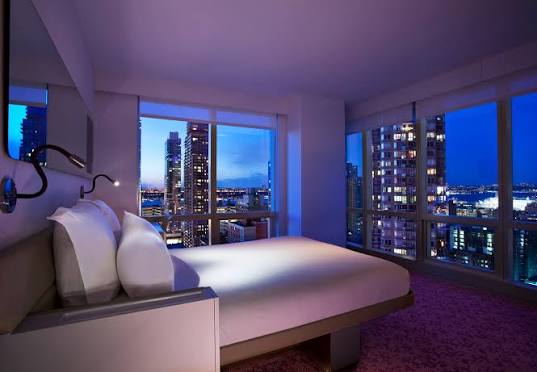
YOTEL New York Times Square — a cabin planned like a ship, with a bed that folds.
A · The Place
YOTEL stands on Tenth Avenue at 42nd Street, on the western edge of Midtown Manhattan. Times Square is about ten minutes east on foot, the Hudson is two blocks west, and the Port Authority terminal is close by. The neighbourhood mixes theatres, bus ramps and new residential towers. The restaurants of Hell's Kitchen are a short walk north, and the High Line begins roughly fifteen minutes to the south.
ASeasonManhattan hotel floors fill in September, October and December.
AGetting thereTwo avenue blocks from Times Square subway lines and the bus terminal.
B · The Building
The hotel occupies a tower above a raised terrace, and the check-in floor sits several storeys up rather than at street level. Registration is done at machines, with staff standing beside them. A robotic luggage store handles bags behind a glass wall in the lobby. Guest floors are stacked above, and the outdoor terrace on the check-in level is one of the larger hotel terraces in this part of Manhattan.
Cabins are compact and planned like a ship: a bed on a powered frame that folds towards a sofa, a work surface along the wall, and a wet room where shower and basin share one space. The window runs the width of the cabin, and higher floors look north or west across the river. Storage is limited, so a large suitcase stays open on the floor unless you leave it in the luggage store.
CAsk at check-inAsk for a high floor facing west if you want the river.
Last read: May 2026
10
Kuala Lumpur International Airport, Malaysia
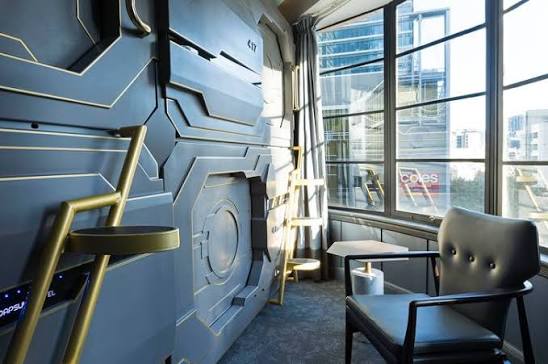
Capsule by Container Hotel
Capsule by Container Hotel, KLIA — transit capsules stacked in two levels inside the terminal.
A · The Place
This one is inside Kuala Lumpur International Airport, within the terminal rather than beside it, so guests never leave the building. It is used between connections and before early departures. Gates, check-in counters and the train into the city are all part of the same complex. There is no view and no neighbourhood here; the airport is the setting, and the walking distance to a gate is the reason people book it.
ASeasonTransit floors are fullest during school holidays and around major festivals.
AGetting thereInside the terminal complex at KLIA; follow signs after passport control.
B · The Building
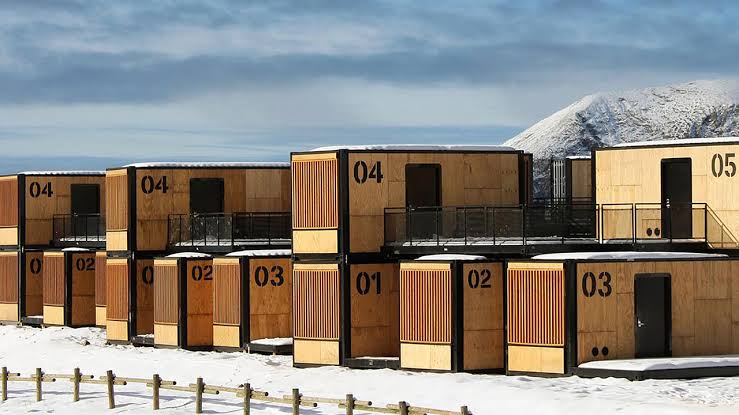
The name comes from shipping containers, and the plan follows that idea: a grid of enclosed, steel-lined cabins built inside one large room. Capsules are stacked in two levels along a corridor, with a ladder up to the upper row. Corridor lighting is kept low, and the light inside each capsule is controlled by the guest. Bathrooms are shared and sit at the end of the block, with towels handed out at the desk.
Capsules are sold by the hour as well as by the night, which shapes the way the place feels; people arrive and leave at every hour, and the corridor is never entirely still. A capsule holds a bed, a light, a socket and a locker. Terminal announcements are audible in some parts of the floor. For a few hours between flights it does exactly the job it was built to do.
CAsk at check-inAsk whether your capsule is upper or lower and where showers are.
Last read: June 2026
Notes in the margin are practical, not critical. Everything here comes from published material and is re-read by hand; the month of the last reading sits at the end of each entry. Tell us when something has moved on.