Skip to content
Art Hotels Capsule Hotels Casino Hotels Ice Hotels The Margin Contact
A high room in an art hotel, with the original structure of the building left visible.
Six hotels where the building came first and the hotel was fitted into it.

Art Hotels — 6

Six hotels stand in this section, and each one is here for its building. A bank, a grain elevator, a publishing house, a set of moved houses, an arch of copper, a timber frame on rock. A hotel with art on the walls and a plain shell around it does not belong here; the building has to be the reason the room looks the way it does.

01

London, United Kingdom

The Ned
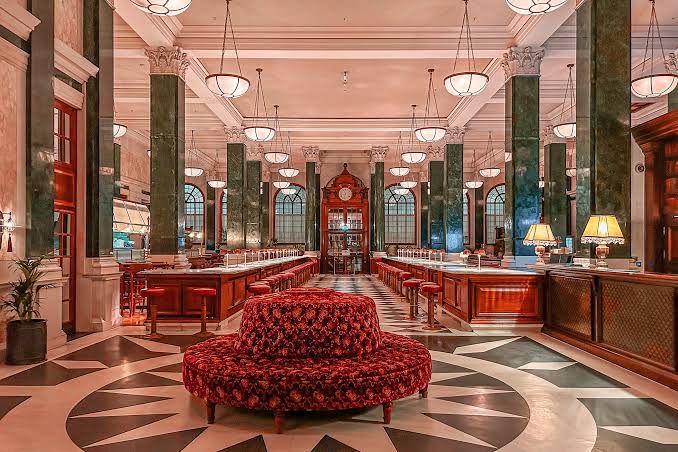
The former Midland Bank banking hall at The Ned in London, with rows of columns between dining tables.
The Ned, London — the banking hall of the former Midland Bank, now the ground floor of the hotel.

A · The Place

The Ned stands on Poultry, in the City of London, a short walk from Bank station. The streets around it empty out at the weekend and fill again on Monday morning. Mansion House and the Royal Exchange are a few minutes away on foot, and the river is ten minutes to the south. The address was chosen a century ago for banking rather than for hospitality, so the hotel sits inside the working City instead of beside it.

ASeasonCity streets are quietest at weekends; December evenings are busy indoors.
AGetting thereBank station is two minutes away; trains from Heathrow reach the City directly.

B · The Building

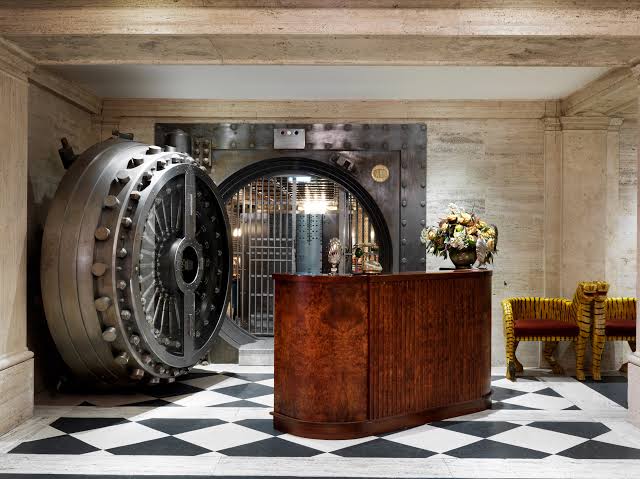
The building was designed by Edwin Lutyens for the Midland Bank and completed in the 1930s. Its banking hall is now the centre of the hotel. The columns were kept where they stood, and the restaurant tables are set between them under the original ceiling. Marble runs across the floor and up to the counters. Guest floors are stacked above the hall, and the old strongroom sits below ground, behind a door that was built for money.

BThe FabricPortland stone outside; marble, dark timber and brass inside the hall.

C · The Night

Rooms are spread over several floors and vary in size and outlook; some face the street, others face an interior light well. The decoration follows the 1930s rather than the present, with dark wood, patterned rugs and freestanding furniture. Sound from the ground floor fades as you climb. Breakfast is served in the same hall that held dinner, so the room reads differently at eight in the morning than it did the night before.

CAsk at check-inAsk which rooms face Poultry and which look onto the interior light well.

Last read: June 2026

02

Cape Town, South Africa

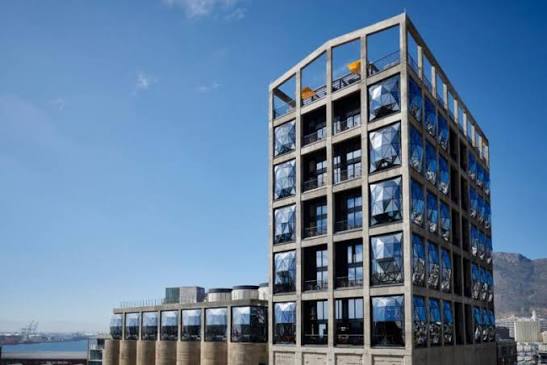
The Silo Hotel

The Silo Hotel in Cape Town, with convex glass windows set into the concrete tower of a former grain elevator.
The Silo Hotel, Cape Town — pillowed glass set into the shell of the old grain elevator.

A · The Place

The Silo Hotel stands at the V&A Waterfront in Cape Town, on the edge of the working harbour. Table Mountain rises behind the district, and the docks are still in use, so cranes and boats are part of the view from the upper floors. The Zeitz Museum of Contemporary Art Africa occupies the lower part of the same structure, and the hotel entrance is separate from the museum entrance. The city centre is a short drive inland.

ASeasonCape Town summer runs November to March; winter brings rain and wind.
AGetting thereTwenty to thirty minutes from Cape Town airport by road, traffic permitting.

B · The Building

The structure was a grain elevator, built to hold maize before it was shipped out of the harbour. Its concrete tubes were cut through to make the museum galleries below, and the hotel occupies the elevator tower above them. The windows are the clearest sign of the conversion: each one is made of convex glass panels set into a steel frame, so the harbour appears slightly bent from inside and the tower reads as faceted from the quay.

BThe FabricPoured concrete tubes, steel frames and pillowed glass panes throughout.

C · The Night

Rooms sit high above the water, and the bulging windows fill most of one wall in each of them. Furniture is modern and strongly coloured against the raw concrete. There is a pool on the roof and a lounge below it. Because the building is close to square in plan and tall for its footprint, the outlook changes from harbour to mountain depending on which side you are on, and no two floors feel identical.

CAsk at check-inAsk which side of the tower your room faces, harbour or mountain.

Last read: June 2026

03

Fogo Island, Newfoundland, Canada

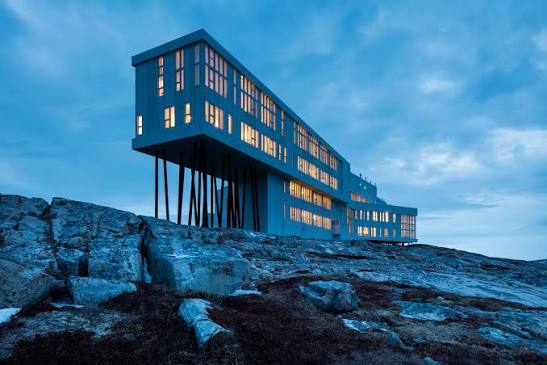
Fogo Island Inn

Fogo Island Inn, a long white building raised on wooden stilts on bare rock at the edge of the Atlantic.
Fogo Island Inn, Newfoundland — the building steps down the rock on wooden stilts.

A · The Place

Fogo Island lies off the north-east coast of Newfoundland, and the inn stands at Joe Batt's Arm, on bare rock at the edge of the Atlantic. Nothing shelters the building from the open water. Fishing communities are spread around the island, and the roads between them are short but slow in bad weather. Icebergs pass in late spring, and the light can change three or four times in a single afternoon.

ASeasonIcebergs pass in late spring; winter storms close roads for a day.
AGetting thereFly to Gander, drive north, then take the ferry to Fogo Island.

B · The Building

The inn is a long building lifted onto wooden stilts, so it steps down the slope without cutting into it. The form borrows from the fishing stages and outbuildings that stand along the same shore. Inside, the furniture, quilts and rugs were made by workshops on the island, using patterns worked out with visiting designers. The building belongs to a community trust, and what it earns is put back into Fogo rather than taken off it.

BThe FabricTimber frame on wooden stilts, white boards, island-made quilts and chairs.

C · The Night

Every room faces the ocean, and each has a window seat built into the wall so that the water sits at eye level from a chair. The rooms are plain: white walls, wooden floors, wool blankets. There is a library, a rooftop sauna and a dining room that serves what the island and the season provide. Nights are quiet enough that the only sound is weather, and in winter the wind carries a long way.

CAsk at check-inAsk which rooms have the window seat facing directly into open water.

Last read: May 2026

04

Tbilisi, Georgia

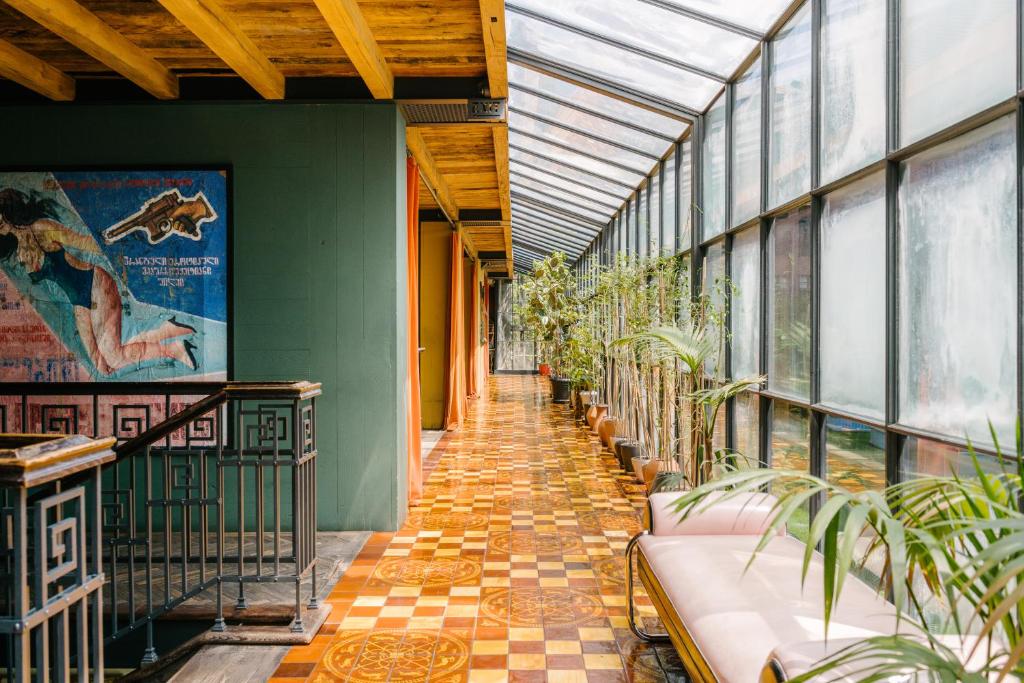
Rooms Hotel Tbilisi

The lounge of Rooms Hotel Tbilisi in a former publishing house, with dark timber, leather chairs and tall windows.
Rooms Hotel Tbilisi — the long plan of the old publishing house is still readable.

A · The Place

Rooms Hotel Tbilisi is in Vera, a district of nineteenth-century apartment blocks north-west of the old town. The streets are steep and narrow, with balconies over the pavement and small shops at ground level. Rustaveli Avenue is a few minutes downhill, and the sulphur baths and the river lie a walk beyond it. The neighbourhood is residential, so the noise around the hotel is domestic rather than commercial for most of the day.

ASeasonSpring and September are mild; August in Tbilisi is hot and dry.
AGetting thereThe airport is about thirty minutes by road, east of the city centre.

B · The Building

The building was a publishing house, and the plan still reads that way: long corridors, tall windows, and rooms set in a row along them. The conversion kept those proportions and added dark wood, leather, old lamps, second-hand furniture and books on open shelves. A terrace runs along the back of the building and looks over the roofs of Vera towards the hills. The lobby is used as a working room by guests and by people who live nearby.

BThe FabricBrick and plaster walls, parquet floors, dark timber, leather and glass.

C · The Night

Rooms follow the old plan, so ceiling heights and window sizes differ from floor to floor. Parquet, rugs and heavy curtains keep the sound down. The restaurant serves Georgian dishes alongside a menu that is not Georgian at all, and breakfast runs late by local habit. The terrace stays busy into the evening, and the hotel makes no attempt to keep its neighbours off it, which is part of how the place works.

CAsk at check-inAsk for a room away from the terrace if you go to bed early.

Last read: May 2026

05

Shanghai, China

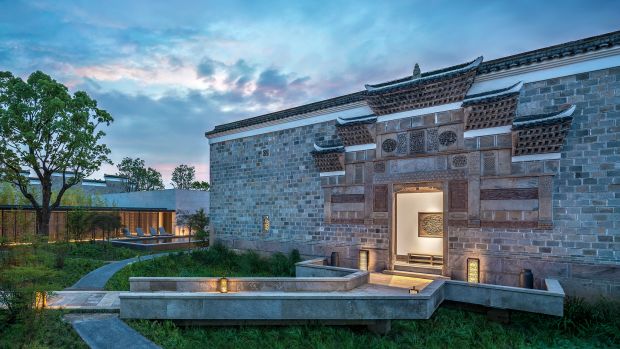
Amanyangyun

A rebuilt Ming dynasty courtyard house at Amanyangyun in Shanghai, standing among transplanted camphor trees.
Amanyangyun, Shanghai — houses taken apart in Jiangxi and rebuilt among moved camphor trees.

A · The Place

Amanyangyun is in Minhang, on the southern edge of Shanghai, about an hour from the centre by road. The site is flat and green, and city noise does not reach it. A camphor forest surrounds the buildings; the trees were brought here rather than found here. Lanes run between the houses and the water, and the scale of the place is closer to a small village than to a hotel, which changes how long a walk takes.

ASeasonSpring and autumn are comfortable; Shanghai summers are humid and heavy.
AGetting thereAbout an hour by road from Hongqiao, longer from Pudong in traffic.

B · The Building

The houses were built in Jiangxi during the Ming and Qing periods and were going to be lost when a reservoir was filled. They were taken apart, numbered, moved several hundred kilometres and put back together on this site, together with camphor trees from the same valley. Some walls and carved timbers are original; the rest was made to match them. Newer villas stand alongside in the same footprint and the same materials.

BThe FabricReassembled Ming timber frames, carved brick, grey stone and camphor wood.

C · The Night

Guests stay either in the rebuilt courtyard houses or in the newer villas, and both open onto private gardens with a wall around them. Rooms are large and quiet, with stone floors, timber screens and daylight arriving from two sides. There is a spa, a swimming pool and a hall used for tea and for music. Walking between buildings after dark takes longer than the map suggests, because the lanes turn rather than run straight.

CAsk at check-inAsk whether your house is an original rebuild or a newer villa.

Last read: April 2026

06

Sao Paulo, Brazil

Hotel Unique

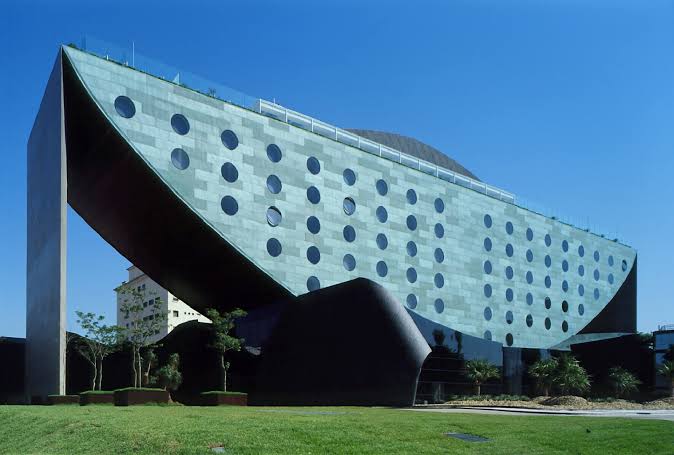
Hotel Unique in Sao Paulo, an inverted copper-clad arch with round windows set in a regular line.
Hotel Unique, Sao Paulo — an inverted arch in oxidised copper, with round windows along the curve.

A · The Place

Hotel Unique stands in Jardim Paulista, near Ibirapuera Park and the avenues that cross the south of Sao Paulo. This is a residential part of the city, with tall blocks, restaurants and shade from street trees. Avenida Paulista is a short drive north. The building can be seen from some distance because of its shape, and drivers tend to know it by that shape rather than by the number on the street.

ASeasonSao Paulo is mild year round; January and February bring heavy rain.
AGetting thereGuarulhos airport is forty minutes to two hours away, depending on traffic.

B · The Building

The building is an inverted arch: it meets the ground at two points and curves upwards between them, faced in oxidised copper. Round windows are set into the curve in a regular line, which is why people describe it as a ship. It was designed by Ruy Ohtake and finished in 2002. The frame is concrete and the arch carries load, so the shape is structural rather than applied to a conventional block.

BThe FabricConcrete arch faced in oxidised copper, with round windows and pale interiors.

C · The Night

Rooms follow the curve, so the angle of the ceiling changes as you move along the building, and the round window is the fixed point in each one. Interiors are white and pale, with built-in furniture and little loose decoration. The pool and bar sit on the roof and look across the district; the bar is open to visitors as well as to guests. Lower floors are quieter, because the roof stays in use late.

CAsk at check-inAsk for a room low in the arch if the rooftop bar concerns you.

Last read: April 2026

Notes in the margin are practical, not critical. Everything here comes from published material and is re-read by hand; the month of the last reading sits at the end of each entry. Tell us when something has moved on.

Elsewhere in the guide: Capsule Hotels · Casino Hotels · Ice Hotels